How to Identify “Truly Low-GI” vs. “Fake Low-GI”: 3 Checkpoints for B-End Buyers
As the low-GI space heats up, more products claim to be low-GI — but not all are verifiable. As a B-end buyer, here are three checkpoints to filter truly reliable suppliers.
Checkpoint 1: Is there a human clinical test report, not just in vitro prediction?
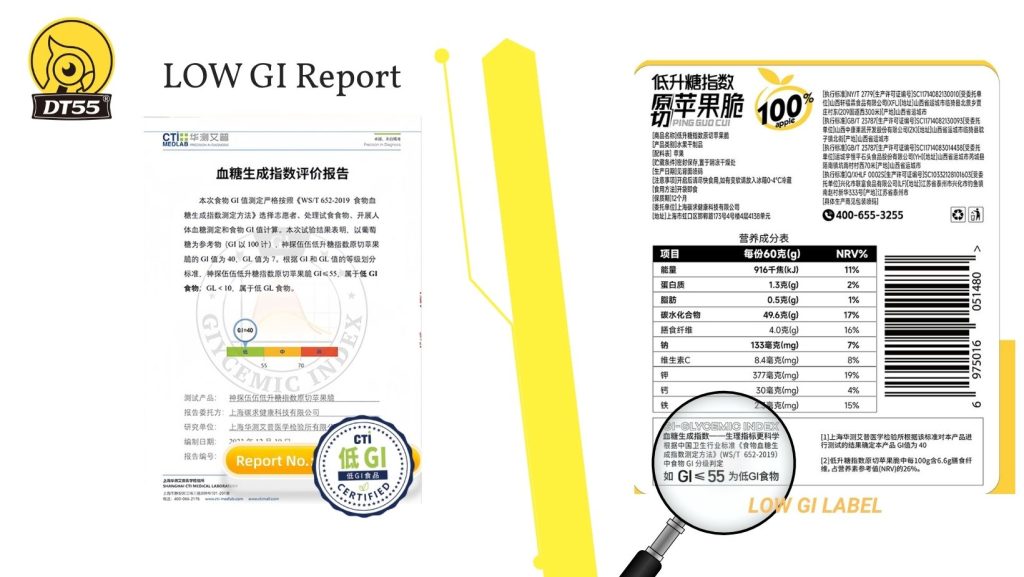
Authentic low-GI certification must be based on human clinical trials (China standard WS/T 652-2019 requires this). Some products only use in vitro digestion models or formula-based calculations, which cannot reflect real human glycemic responses. Request a full human test report including participant count, test protocol, blood glucose curves, and statistical results.
Checkpoint 2: Is the certification body authorized by CNCA?
In China, low-GI certification must be issued by a CNCA-authorized certification body. “Low-GI certificates” from unauthorized bodies have no legal validity. Buyers can ask for the certification body’s CNCA approval number and verify it on the CNCA official website.
Checkpoint 3: Is the GI value and testing standard clearly labeled on the packaging?
Compliant low-GI products should clearly state the GI value and the testing standard (e.g., WS/T 652-2019) on the packaging. Key nutrients such as dietary fiber, protein, and fat should also be listed to verify consistency of nutritional claims.
How Detective No.55 meets all three points: Every product undergoes human clinical testing, is certified by a CNCA-authorized body, displays GI value and testing standard on the packaging, and provides complete reports for client review. Our after-sales return rate is just 0.5% — far below the industry average.
Need a quote or spec sheet?
Tell us your channel and target market — our export team replies within one business day.
Get a Quote