Understanding GI Information on Food Labels: A Practical Guide

More and more food products are carrying “low-GI” claims or GI values on their packaging. But for most consumers, what this information actually means — and how to tell if it’s reliable — remains unclear.
GI (Glycemic Index) measures how much a carbohydrate-containing food affects post-meal blood glucose levels. Foods with a GI value ≤55 are classified as low-GI. However, seeing the words “low-GI” on a package is not enough to make a decision. Here are a few key things to look for.
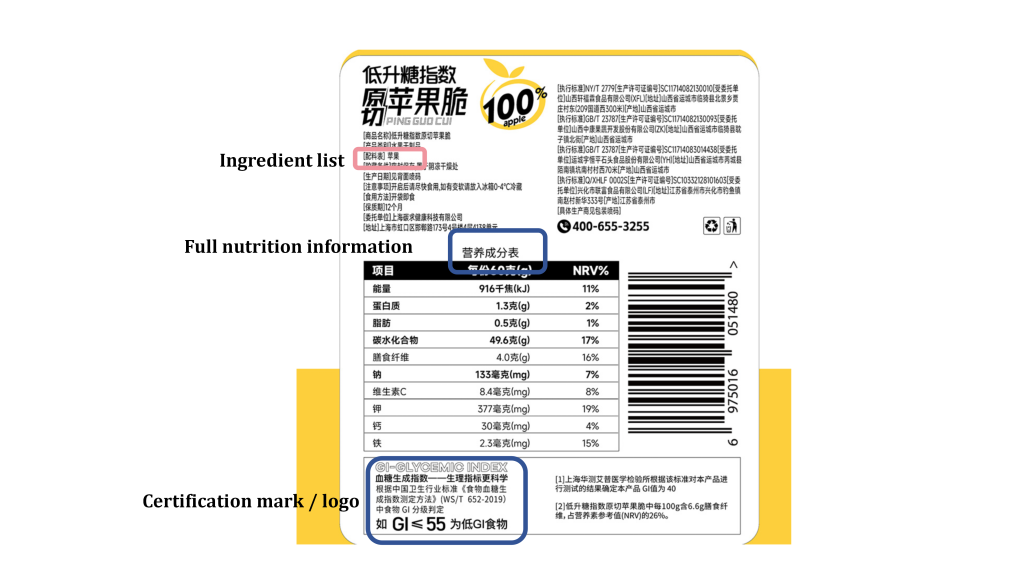
1. Check for certification marks
Only products that have passed low-GI food certification can use low-GI certification marks on packaging. Certification bodies must be third-party independent organizations approved by the State Administration for Market Regulation. Some certification bodies have also introduced traceable labels — scanning the QR code provides detailed information including GI value and data sources. If a package only says “low-GI” without a certification mark or report number, it’s worth checking further.
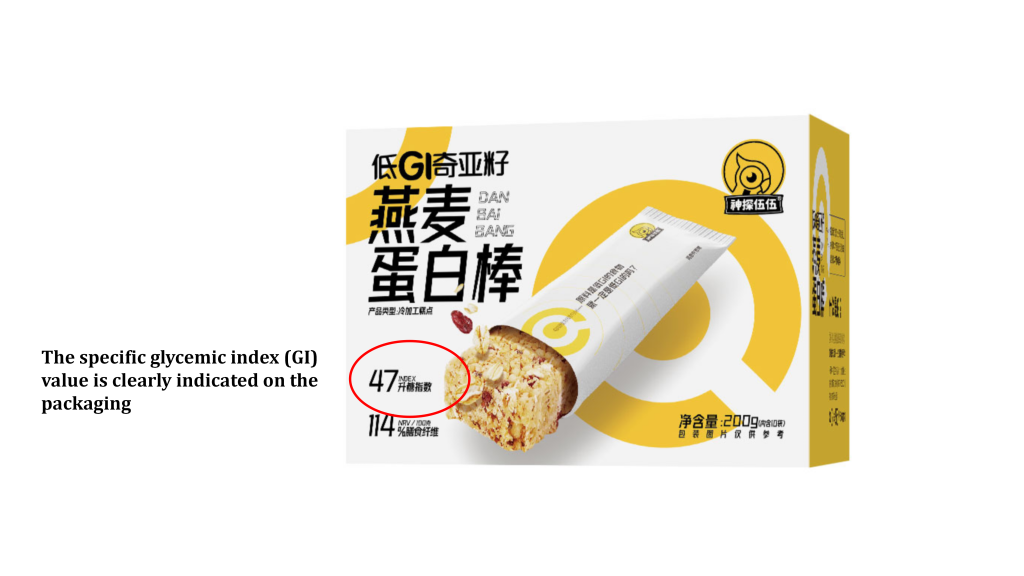
2. Look for the actual GI number
Reliable low-GI products typically display a specific GI value (e.g., GI=48). A “low-GI” claim without a number doesn’t tell you how low it actually is. Additionally, GI values must be determined through human testing according to national standard methods, and the tested formula must match the product sold.
3. Read the full nutrition facts panel
GI value is just one reference point. Under the relevant standard currently under征求意见, for a product to carry a low-GI claim, it must not only meet the GI threshold but also satisfy category-specific upper limits for fat, saturated fat, and sodium content. This means you should look at fat, sodium, and other indicators alongside GI.
4. Check the ingredient list
Ingredients are listed in descending order by weight. If white sugar or refined flour appears near the top, even a low-GI claim warrants a closer look. Whole grains and ingredients high in dietary fiber generally support a more stable glycemic response.
Understanding this information isn’t about making shopping more complicated. It’s about making choices with more confidence.
Contact us for cooperation:[email protected]
Need a quote or spec sheet?
Tell us your channel and target market — our export team replies within one business day.
Get a Quote