Why Food GI Values Must Be Human-Tested
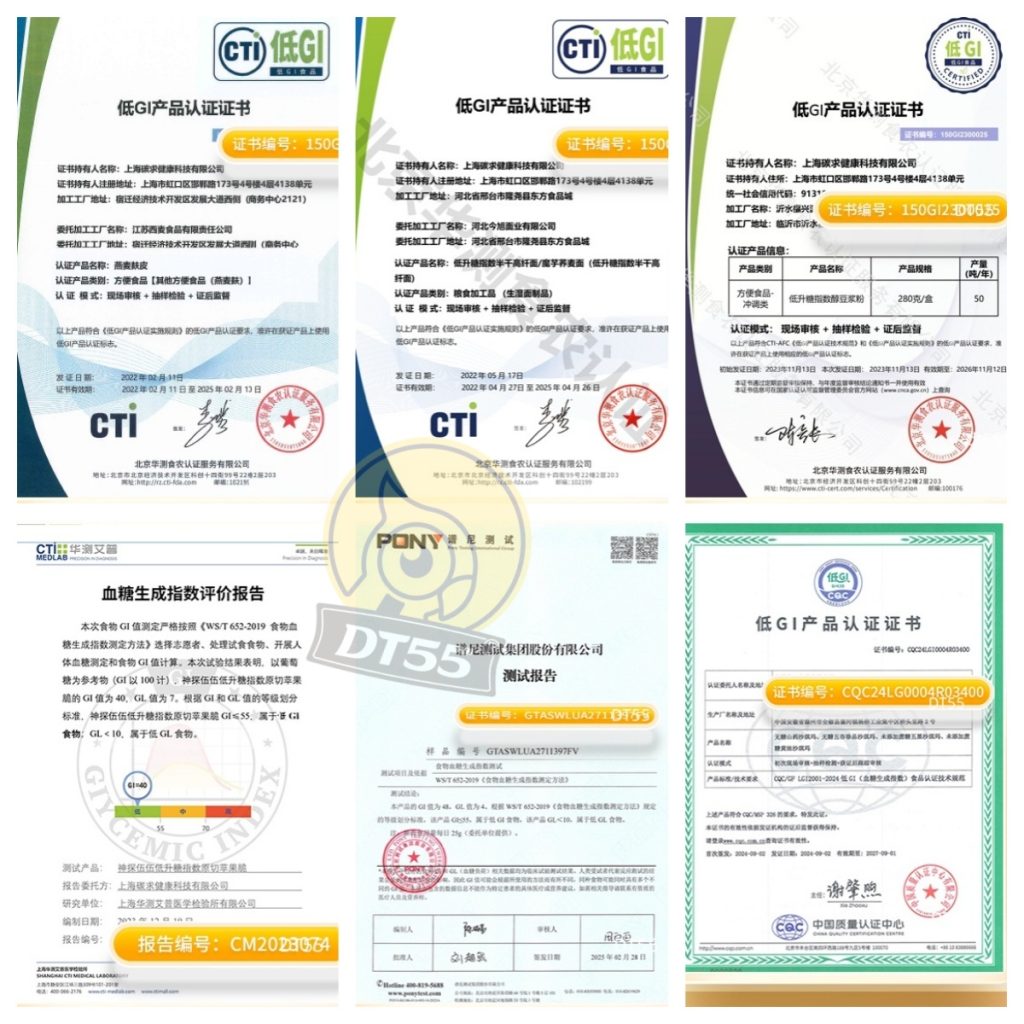
How can consumers verify a “low‑GI” claim on food packaging? The answer is the certification system operated by organizations authorized by the Certification and Accreditation Administration of China (CNCA), which strictly follows the National Health Commission’s standard WS/T 652‑2019. Under this standard, GI values must be determined through standardized human clinical trials.
The test procedure requires at least 12 healthy volunteers. Each participant consumes both the test food and a reference food (glucose), with blood samples taken multiple times over two hours to calculate the GI value. Only foods with a GI ≤55 can be certified as low‑GI.
Unlike the simpler “sugar‑free” label, low‑GI certification is anchored in in‑vivo evidence. The GI value reflects the body’s glycemic response to carbohydrate intake, not the total carbohydrate content. Low‑GI foods stay longer in the digestive tract, releasing glucose gradually, which results in a lower post‑meal blood glucose peak. For precisely this reason, the certification standard also imposes differentiated requirements on fiber and fat content, preventing products that are “high‑fat but low‑GI” from entering the market.
Every Detective No.55 product bearing a low‑GI label has completed human clinical trials. For example, the Low‑GI Oat Bran has a tested GI of 49.5, the Resistant Starch Rice 43.59, and the Chicken & Corn Bites 33 — all data are traceable and the certifications are verifiable.
Need a quote or spec sheet?
Tell us your channel and target market — our export team replies within one business day.
Get a Quote